
Why Perfect Posture Is Failing You: The Modern Ergonomics Approach to Pain Relief
Ergonomics is often framed as finding the perfect posture, the ideal chair height, monitor level, or sitting position. While workstation setup matters, research and clinical experience show that no posture is healthy if you remain in it for too long.
True ergonomics is about supporting your body’s need to move.
This modern approach to ergonomics focuses on frequent movement, foundational strength, and simple daily resets to help reduce stiffness, improve comfort, and support long-term musculoskeletal health, especially for people who sit or stand for long hours.
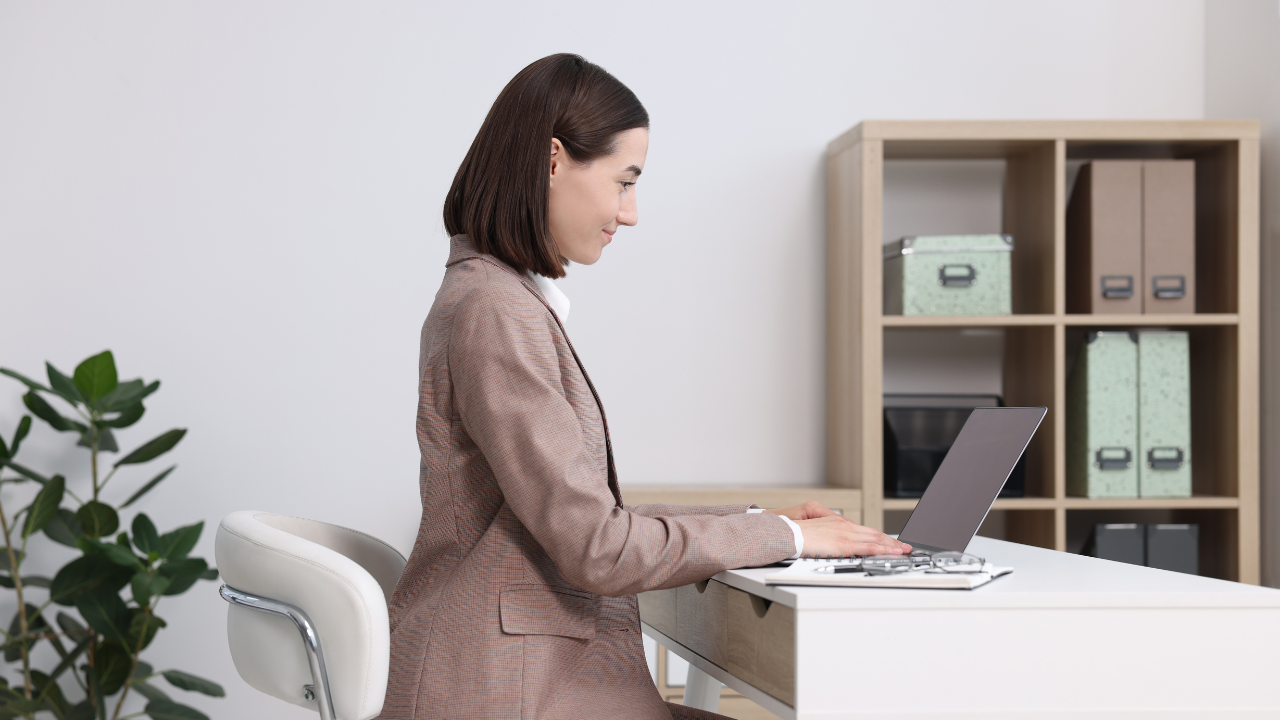
Why Perfect Posture Isn’t Enough
Even with an ergonomic workstation, prolonged static positions can lead to:
-
- Neck and shoulder tension
- Low back stiffness
- Hip tightness
- Fatigue and reduced focus
Your body is designed for motion, not stillness. Holding any position, whether good or bad, eventually overloads tissues and contributes to discomfort.
The goal isn’t perfect posture. It’s variability.
The Power of Movement-Based Ergonomics
Movement-based ergonomics emphasizes frequent position changes throughout the day.
Small movements help:
-
- Improve circulation
- Keep joints mobile
- Reduce muscle fatigue
- Interrupt pain patterns before they build
Think less about how you sit and more about how often you move.
A helpful reminder: The best posture is your next posture.
Strength: The Missing Piece in Workplace Comfort
Movement alone helps, but strength enables your body to meet daily demands.
When muscles like the core, hips, and upper back are strong:
-
- Sitting and standing require less effort.
- Postural muscles fatigue more slowly.
- Your body adapts better to long workdays.
Without adequate strength, even the best ergonomic setup can fall short.
Simple Daily Resets You Can Do Anywhere
You don’t need long breaks or special equipment. These short resets can make a big difference:
-
- Posture reset: Gently roll your shoulders back and down, then relax.
- Micro-breaks: Stand or walk for 30–60 seconds every 30–60 minutes.
- Neck mobility: Slow head turns or side bends.
- Hip movement: Sit-to-stand transitions or brief walks.
- Breathing reset: Deep nasal breaths to reduce tension.
Consistency matters more than intensity.
Rethinking Ergonomics for Long-Term Health
Ergonomics shouldn’t lock you into one “correct” position. Instead, it should:
-
- Encourage movement
- Support strength
- Adapt to your day
When ergonomics works with your body, not against it, you’re more likely to experience less stiffness, better energy, and improved comfort throughout the workday.
Commonly Asked Questions Related to Ergonomics
What is ergonomics?
Ergonomics is the practice of designing tasks, workspaces, and habits to support how the human body naturally moves and functions, reducing strain and discomfort.
Is poor posture the main cause of pain at work?
Not usually. Prolonged stillness is often a bigger contributor than posture alone. Even “good posture” can lead to pain if held too long.
How often should I move during the workday?
Aim to change positions or move briefly every 30–60 minutes. Small, frequent movement is more effective than occasional long breaks.
Do sit-stand desks help with ergonomics?
Yes, but only if you alternate positions regularly. Standing all day can be just as uncomfortable as sitting all day.
Can exercise outside of work offset long hours of sitting?
Exercise helps, but it doesn’t fully counteract prolonged static positions. Daily movement during work hours is still essential.
When should I seek help from a Physical Therapist?
If stiffness, pain, or discomfort persists despite movement and adjustments, a Physical Therapist can assess your posture, strength, and movement patterns to provide individualized strategies.
Learn How to Move Better at Work
Learn how to reduce stiffness, improve comfort, and build healthier workday habits—without obsessing over posture.
Hosted by Katie Wolfley, PT, DPT, this session from our 2026 YMCA Wellness Series focuses on practical ways to reduce stiffness and help you feel better throughout the day.
Check out the replay of our 2026 YMCA Wellness Series class, “Rethinking Ergonomics: Move More, Hurt Less,” led by Physical Therapist Marta Zagrobleny, PT DPT CAFS, and Physical Therapist Assistant, Ali Hartman, PTA CAFS CPT CSFNS.